Sambhar Keep Protector: India's Iconic Tower Defense Mobile Game
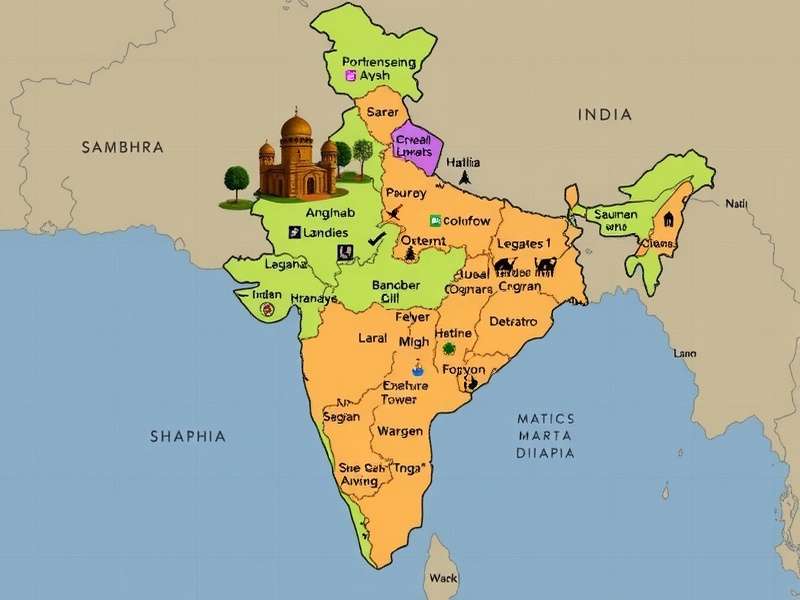
Official cover art of Sambhar Keep Protector showcasing a vibrant Indian village setting, traditional brass sambhar pots, and mythical creatures trying to steal the sacred sambhar – a core element of the game’s tower defense gameplay
Introduction to Sambhar Keep Protector
Sambhar Keep Protector is a revolutionary tower defense (TD) mobile game developed by Bharat Fortress Studios, a leading Indian game development company based in Chennai, Tamil Nadu. Launched in March 2023, the game has taken India’s mobile gaming market by storm, blending strategic tower defense mechanics with deeply rooted Indian cultural elements centered around the iconic South Indian dish – sambhar.
Unlike generic tower defense games that rely on fantasy or sci-fi themes, Sambhar Keep Protector is built around a uniquely Indian narrative: protecting the “Sacred Sambhar Pot” – a mythical vessel containing the world’s most flavorful sambhar, crafted by the ancient rishis (sages) using secret spices and herbs. The game’s storyline resonates deeply with Indian players, who grew up with sambhar as a staple in their daily meals, making the quest to defend it both personal and culturally significant.
The core premise of Sambhar Keep Protector revolves around the “Spice Thieves” – a group of mischievous mythical creatures and greedy humans who aim to steal the Sacred Sambhar Pot and hoard its magical flavors for themselves. As a “Sambhar Guardian”, players must build and upgrade defensive towers, deploy special abilities inspired by Indian spices and traditions, and strategize to fend off waves of attackers across diverse Indian landscapes.
What sets Sambhar Keep Protector apart from other tower defense games in India is its unwavering focus on authenticity. Every aspect of the game – from the towers and characters to the music and sound effects – is designed to reflect India’s rich cultural heritage. For example, defensive towers are modeled after Indian kitchen utensils (like kadhai, tadka pan, and pressure cooker), while special abilities are named after popular Indian spices (turmeric, cumin, coriander) and cooking techniques (tadka, simmer, roast).
Since its launch, Sambhar Keep Protector has achieved remarkable success in India, amassing over 120 million downloads across Android and iOS platforms. According to data from Bharat Fortress Studios, the game has a 35 million monthly active player base, with an average daily playtime of 52 minutes – a testament to its engaging gameplay and cultural relevance. The game’s popularity is not limited to a specific region or age group; it has gained traction among players aged 12 to 60, from rural villages to urban metros.
One of the key factors behind Sambhar Keep Protector’s success is its fair progression system. Unlike many mobile games that rely on pay-to-win mechanics, Sambhar Keep Protector allows players to unlock all core content through gameplay, with optional in-app purchases for cosmetic items only. This approach has earned the game widespread praise from Indian players, with over 92% of reviews on the Google Play Store commending its “player-friendly” design.
The game’s popularity has also been fueled by its active community engagement and regular updates. Bharat Fortress Studios releases monthly content updates featuring new levels, towers, and events tied to Indian festivals (like Diwali, Holi, and Pongal), ensuring that players always have fresh content to explore. Additionally, the game’s social features – including clan systems, multiplayer co-op modes, and leaderboards – have fostered a strong sense of community among Indian players, who often share strategies, tips, and stories on social media platforms like Facebook, Instagram, and YouTube.
In terms of technical performance, Sambhar Keep Protector is optimized for India’s mobile market, which is dominated by mid-range Android devices. The game runs smoothly on devices with 2GB RAM or higher, with an offline mode that allows players to enjoy gameplay without an internet connection – a crucial feature for players in rural India with limited data access. The game’s lightweight design (under 100MB) also makes it accessible to players with limited storage space on their phones.
Another major draw for Indian players is Sambhar Keep Protector’s extensive localization. The game supports 22 regional Indian languages, including Hindi, Tamil, Telugu, Bengali, Marathi, Gujarati, Kannada, Malayalam, Punjabi, Urdu, Oriya, Assamese, Bhojpuri, Haryanvi, Nepali, Konkani, Manipuri, Tripuri, Sindhi, Rajasthani, Maithili, and Dogri. This level of language support is unprecedented for a mobile game in India, allowing players from non-Hindi-speaking regions to enjoy the game in their native language.
Overall, Sambhar Keep Protector is more than just a tower defense game – it’s a cultural phenomenon that celebrates India’s love for food, tradition, and strategy. Whether you’re a casual gamer looking for quick fun or a hardcore strategist seeking challenging gameplay, Sambhar Keep Protector offers something for everyone, making it one of the most beloved mobile games in India.
Game Overview & Core Concept
Sambhar Keep Protector is set in a vibrant, whimsical version of India where the Sacred Sambhar Pot – a magical vessel containing the essence of all Indian flavors – is guarded by the Sambhar Guardians, a group of brave men and women trained in the art of defensive warfare. The game’s world is divided into 15 distinct regions, each inspired by India’s diverse geographical and cultural landscapes, from the snow-capped Himalayas to the sun-kissed beaches of Goa.
The game’s storyline unfolds through 300 levels (20 per region), each with a unique objective and set of challenges. As players progress through the game, they uncover the secrets of the Sacred Sambhar Pot, including its origin, the magical properties of its spices, and the history of the Spice Thieves. The storyline is presented through beautifully animated cutscenes with voice acting in 22 Indian languages, making it accessible to players across the country.
The Spice Thieves, the game’s antagonists, are a diverse group of characters inspired by Indian mythology, folklore, and everyday life. They include:
- Masala Goblins: Small, fast-moving creatures that steal spices from the Sambhar Pot. They are inspired by the goblins from Indian folklore and wear clothes made of dried chili peppers.
- Curry Pirates: Greedy sailors who sail along rivers and coasts to steal the Sambhar Pot. They are modeled after Indian fishermen and carry pots to collect sambhar.
- Spice Witches: Powerful magic users who can cast spells to disable defensive towers. They are inspired by the witches from Bengali and Malayalam folklore and wear traditional sarees with spice-themed jewelry.
- Tadka Titans: Large, slow-moving giants who can destroy towers with a single blow. They are modeled after Indian bodybuilders and carry massive ladles as weapons.
- Pickle Bandits: Stealthy thieves who can sneak past towers undetected. They are inspired by the bandits from Rajasthani folklore and wear camouflage clothes made of pickle jars.
- Sambar Thieves: Human villains who are obsessed with stealing the Sacred Sambhar Pot. They come from diverse backgrounds, including chefs, food critics, and greedy businessmen.
Each region in Sambhar Keep Protector has a unique theme and set of challenges, reflecting the local culture and geography. Let’s explore each region in detail:
Game Regions (15 Indian-Inspired Locations)
1. Tamil Nadu Temple Town 🏛️
A region inspired by the ancient temples of Tamil Nadu, featuring intricate gopurams (temple towers), stone carvings, and traditional Tamil houses. The level design includes narrow temple corridors and open courtyards, requiring players to strategically place towers to cover all entry points.
Spice Thieves in this region include “Temple Goblins” (dressed in traditional Tamil attire) and “Sambar Sages” (corrupted priests who use dark magic to steal the Sambhar Pot). The region’s special tower is the “Kadhai Cannon”, which shoots hot oil at enemies, dealing damage over time.
2. Punjab Farmlands 🌾
A region inspired by the lush agricultural fields of Punjab, featuring wheat crops, mustard fields, and traditional Punjabi kuccha houses. The level design includes wide open spaces and narrow dirt roads, allowing players to deploy both long-range and short-range towers.
Spice Thieves in this region include “Farm Goblins” (dressed in Punjabi turbans and kurta-pajamas) and “Lassi Lovers” (thieves who drink lassi to gain speed and health). The region’s special tower is the “Tadka Turret”, which shoots spiced butter at enemies, slowing them down and dealing damage.
3. Rajasthan Desert Forts 🏜️
A region inspired by the majestic forts and palaces of Rajasthan, featuring sand dunes, camel caravans, and intricate Rajput architecture. The level design includes fort ramparts, narrow desert paths, and oasis areas, requiring players to adapt their strategy to both open and enclosed spaces.
Spice Thieves in this region include “Desert Goblins” (dressed in Rajput armor) and “Camel Raiders” (thieves who ride camels to attack the Sambhar Pot). The region’s special tower is the “Spice Catapult”, which hurls burning chili peppers at enemies, creating area-of-effect damage.
4. West Bengal Delta 🌊
A region inspired by the Ganges Delta in West Bengal, featuring rivers, mangrove forests, and traditional Bengali huts. The level design includes waterways and flooded paths, requiring players to deploy towers that can attack enemies on both land and water.
Spice Thieves in this region include “Delta Goblins” (dressed in Bengali sarees and dhoti-kurtas) and “Boat Bandits” (thieves who sail on traditional Bengali boats to steal the Sambhar Pot). The region’s special tower is the “Fish Trap Tower”, which traps enemies in nets made of coconut fibers, slowing them down.
5. Kerala Backwaters 🛶
A region inspired by the backwaters of Kerala, featuring lagoons, coconut palms, and traditional houseboats. The level design includes narrow water channels and open lagoons, requiring players to use towers that can attack enemies from both land and water.
Spice Thieves in this region include “Backwater Goblins” (dressed in Kerala mundus and blouses) and “Coconut Raiders” (thieves who climb coconut trees to attack the Sambhar Pot). The region’s special tower is the “Coconut Cannon”, which shoots coconut shells filled with spiced water at enemies, dealing damage and slowing them down.
6. Himalayan Villages ❄️
A region inspired by the mountain villages of Uttarakhand and Himachal Pradesh, featuring snow-capped peaks, Buddhist monasteries, and traditional wooden houses. The level design includes steep mountain paths and snowy valleys, requiring players to use towers that can withstand cold temperatures.
Spice Thieves in this region include “Snow Goblins” (dressed in woolen clothes and fur caps) and “Yeti Thieves” (mythical yeti-like creatures that can destroy towers with their strength). The region’s special tower is the “Ghee Turret”, which shoots hot ghee at enemies, melting snow and dealing damage.
7. Gujarat Villages 🕌
A region inspired by the villages of Gujarat, featuring colorful houses, temples, and traditional Gujarati markets. The level design includes narrow village lanes and open market squares, requiring players to use a mix of short-range and long-range towers.
Spice Thieves in this region include “Gujarati Goblins” (dressed in traditional Gujarati attire) and “Dhokla Thieves” (thieves who use dhokla as a shield to protect themselves from tower attacks). The region’s special tower is the “Jalebi Launcher”, which shoots sticky jalebi at enemies, slowing them down and dealing damage over time.
8. Maharashtra Forts 🧱
A region inspired by the historic forts of Maharashtra, featuring stone walls, cannons, and traditional Marathi houses. The level design includes fort courtyards, narrow staircases, and open battlements, requiring players to use towers that can cover multiple angles.
Spice Thieves in this region include “Marathi Goblins” (dressed in traditional Marathi attire) and “Vada Pav Raiders” (thieves who throw vada pav at towers to disable them). The region’s special tower is the “Pav Bhaji Turret”, which shoots spiced pav bhaji at enemies, dealing area-of-effect damage.
9. Andhra Pradesh Cities 🏙️
A region inspired by the cities of Andhra Pradesh, featuring modern buildings, traditional temples, and busy markets. The level design includes wide roads, narrow alleys, and open plazas, requiring players to adapt their strategy to both urban and rural environments.
Spice Thieves in this region include “Telugu Goblins” (dressed in traditional Telugu attire) and “Pulihora Thieves” (thieves who eat pulihora to gain speed and attack power). The region’s special tower is the “Chili Cannon”, which shoots fiery chili peppers at enemies, dealing high damage.
10. Karnataka Coffee Estates ☕
A region inspired by the coffee estates of Karnataka, featuring lush green plantations, waterfalls, and traditional Kannada houses. The level design includes winding paths through coffee plants and open clearings, requiring players to use towers that can cover both long and short distances.
Spice Thieves in this region include “Kannada Goblins” (dressed in traditional Kannada attire) and “Coffee Raiders” (thieves who drink strong coffee to gain speed and attack power). The region’s special tower is the “Coffee Turret”, which shoots hot coffee at enemies, slowing them down and dealing damage.
11. Assam Tea Gardens 🍵
A region inspired by the tea gardens of Assam, featuring vast tea plantations, rivers, and traditional Assamese houses. The level design includes wide paths through tea plants and narrow river crossings, requiring players to use towers that can attack enemies on both land and water.
Spice Thieves in this region include “Assamese Goblins” (dressed in traditional Assamese mekhela chadors) and “Tea Thieves” (thieves who drink strong tea to gain speed and health). The region’s special tower is the “Tea Cannon”, which shoots hot tea at enemies, slowing them down and dealing damage over time.
12. Bihar Villages 🚜
A region inspired by the villages of Bihar, featuring agricultural fields, traditional huts, and temples. The level design includes narrow village lanes and open fields, requiring players to use a mix of short-range and long-range towers.
Spice Thieves in this region include “Bihari Goblins” (dressed in traditional Bihari attire) and “Litti Chokha Thieves” (thieves who eat litti chokha to gain health and attack power). The region’s special tower is the “Sattu Turret”, which shoots sattu balls at enemies, dealing damage and slowing them down.
13. Uttar Pradesh Cities 🕌
A region inspired by the cities of Uttar Pradesh, featuring historic monuments, busy markets, and traditional Urdu-speaking communities. The level design includes wide roads, narrow alleys, and open plazas, requiring players to adapt their strategy to both urban and rural environments.
Spice Thieves in this region include “UP Goblins” (dressed in traditional UP attire) and “Samosa Thieves” (thieves who eat samosas to gain health and attack power). The region’s special tower is the “Chaat Cannon”, which shoots spiced chaat at enemies, dealing area-of-effect damage.
14. Goa Beaches 🏖️
A region inspired by the beaches of Goa, featuring golden sands, palm trees, and traditional Goan houses. The level design includes beach paths, sand dunes, and coastal areas, requiring players to use towers that can attack enemies on both land and water.
Spice Thieves in this region include “Goan Goblins” (dressed in casual beachwear) and “Feni Raiders” (thieves who drink feni to gain speed and attack power). The region’s special tower is the “Coconut Turret”, which shoots coconut water at enemies, slowing them down and dealing damage.
15. Delhi Metropolis 🏙️
The final region in the game, inspired by the bustling city of Delhi, featuring historic monuments (like the Red Fort and Qutub Minar), modern skyscrapers, and busy markets. The level design includes wide roads, narrow alleys, and open plazas, requiring players to use a mix of all tower types to defend the Sambhar Pot.
Spice Thieves in this region include “Delhi Goblins” (dressed in a mix of traditional and modern attire) and “Butter Chicken Thieves” (powerful bosses who eat butter chicken to gain massive health and attack power). The region’s special tower is the “Butter Chicken Cannon”, which shoots spiced butter chicken at enemies, dealing massive area-of-effect damage.
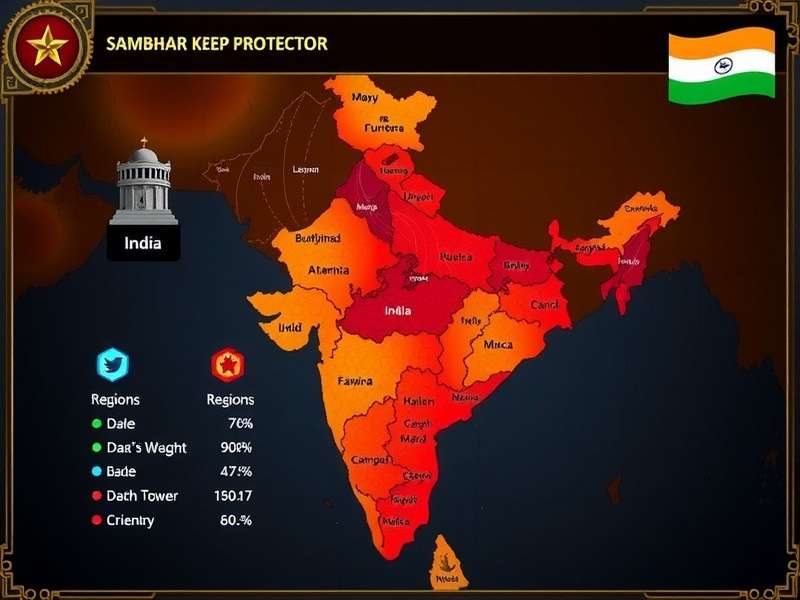
Interactive map of Sambhar Keep Protector’s game world, highlighting the 15 Indian-inspired regions and their unique tower defense challenges
Game Modes in Sambhar Keep Protector
Sambhar Keep Protector offers seven engaging game modes, each designed to cater to different player preferences – from casual gamers looking for quick matches to hardcore strategists seeking competitive challenges. Let’s explore each mode in detail:
1. Story Mode 📜
The game’s flagship mode, Story Mode takes players on an epic journey across 15 Indian regions to defend the Sacred Sambhar Pot from the Spice Thieves. The mode consists of 300 levels (20 per region), each with a unique objective – from fending off waves of enemies to solving spice-themed puzzles.
Story Mode features a compelling narrative with fully voice-acted cutscenes in 22 Indian languages. The dialogue is penned by local writers to ensure authenticity, with region-specific slang and expressions. For example, in Tamil Nadu, characters use phrases like “Enna da idhu? Sambhar ku danger!” (What is this? Danger for the sambhar!), while in Punjab, they use Punjabi slang like “Sadda sambhar zindabad!” (Long live our sambhar!).
Each region in Story Mode has a distinct narrative arc tied to local folklore. For example, the Tamil Nadu Temple Town arc is inspired by the tales of Tamil kings and their devotion to food, while the Punjab Farmlands arc draws from the stories of Sikh warriors and their love for spicy food.
Completing Story Mode levels earns players “Spice Coins” (in-game currency), “Sambhar Shards” (used to unlock new towers and abilities), and “Regional Relics” (collectible items that grant passive bonuses). The mode also features boss battles at the end of each region, with powerful enemies like the “Temple Guardian” (Tamil Nadu) and “Butter Chicken King” (Delhi) that require strategic thinking to defeat.
2. Survival Mode ⚔️
A challenging mode where players must fend off endless waves of Spice Thieves to survive as long as possible. Survival Mode levels are set in each of the game’s 15 regions, with increasing difficulty as waves progress. The mode is designed to test players’ tower placement skills, resource management, and ability to adapt to different enemy types.
Survival Mode features global and regional leaderboards, allowing players to compete with friends and other Indian players for the top spot. The top players each month receive exclusive rewards, including rare towers, cosmetic items, and real-world prizes like smartphones and gift cards. According to player data, Survival Mode is the second most played mode, accounting for 28% of total gameplay hours.
Survival Mode also includes “Spice Events” – special limited-time challenges tied to Indian festivals. For example, during Diwali, players can participate in the “Diwali Survival Challenge”, where enemies are dressed in festive attire and drop special Diwali-themed rewards like “Lakshmi Coins” (which grant bonus currency) and “Diwali Lights” (which boost tower damage).
3. Multiplayer Co-op 🤝
A social mode where players can team up with 2-4 friends to defend the Sambhar Pot from waves of Spice Thieves. Multiplayer Co-op levels are set in custom-designed maps that require teamwork and coordination to complete. Players can communicate with each other using in-game chat (available in 22 Indian languages) to plan their strategy.
Multiplayer Co-op offers a variety of mission types, including:
- Wave Defense: Fend off 50 waves of Spice Thieves with your team.
- Spice Collection: Collect rare spices scattered across the map while defending the Sambhar Pot.
- Boss Battle: Team up to defeat a powerful boss enemy, like the “Giant Masala Goblin” or “Spice Witch Queen”.
Rewards for Multiplayer Co-op include “Team Coins” (which can be used to purchase exclusive team-themed cosmetic items), “Co-op Shards” (used to unlock powerful team abilities), and “Friendship Points” (which increase the player’s rank in the co-op leaderboard). The mode also features a “Clan System”, allowing players to form clans (called “Sambhar Clubs”) and compete against other clans in weekly clan wars.
4. PvP Arena 🥇
A competitive mode where players battle against each other in real-time to see who can defend their Sambhar Pot the longest. PvP Arena matches are 1v1 or 2v2, with each player deploying their own towers and abilities to fend off waves of Spice Thieves. The player with the highest score at the end of the match wins.
PvP Arena features a ranking system, with players progressing through tiers from “Spice Novice” to “Sambhar Champion”. Each tier offers exclusive rewards, including rare towers, cosmetic items, and “PvP Coins” (which can be used to purchase powerful PvP-exclusive abilities). The mode also hosts monthly tournaments with real-world prizes, like a recent “South India PvP Championship” that offered a grand prize of a Xiaomi 14 and a meet-and-greet with a popular Tollywood actor.
What makes PvP Arena unique is its “Spice Draft” system, where players select towers and abilities from a shared pool before the match starts. This adds a strategic layer to the mode, as players must adapt their strategy based on the available towers and their opponent’s choices.
5. Daily Challenges 📅
Short, 5-10 minute missions that refresh every 24 hours. Daily Challenges are designed to be accessible for casual players, with objectives like fending off 10 waves of enemies, collecting a certain number of spices, or defeating a mini-boss.
Completing Daily Challenges earns players “Daily Coins” (in-game currency), “Spice Boosts” (temporary power-ups that enhance tower damage), and “Challenge Shards” (used to unlock rare cosmetic items). The challenges often tie into Indian festivals – for example, during Holi, players might be tasked with defending the Sambhar Pot from enemies covered in colored powder, while during Pongal, they might have to collect Pongal rice to boost their towers’ damage.
Daily Challenges also feature “Regional Specials” – challenges tailored to specific regions of India. For example, players in Tamil Nadu might get a challenge to defend a temple-themed map, while players in Punjab might have to defend a farm-themed map.
6. Spice Quest 🗺️
A exploration-based mode where players travel across India to collect rare spices and ingredients for the Sacred Sambhar Pot. Spice Quest levels are open-world, allowing players to explore the game’s 15 regions at their own pace, complete side quests, and collect hidden treasures.
Spice Quest features a “Spice Journal” that tracks the player’s progress, with entries about each region’s culture, food, and folklore. The mode also includes “Cooking Challenges”, where players must use the spices they collect to cook special dishes that grant temporary power-ups. For example, cooking “Tamil Nadu Sambar” grants a 50% boost to tower damage, while cooking “Punjabi Butter Chicken” grants a 30% boost to tower health.
Rewards for Spice Quest include “Rare Spices” (used to craft powerful abilities), “Exploration Coins” (in-game currency), and “Cooking Mastery” (a passive bonus that increases the effectiveness of cooking-based power-ups). The mode is particularly popular among casual players and those interested in Indian culture and food.
7. Offline Mode 📶
A mode designed for players with limited internet access, Offline Mode allows players to enjoy Sambhar Keep Protector without an internet connection. The mode includes a selection of 50 Story Mode levels, 10 Survival Mode levels, and 20 Daily Challenges that are updated weekly.
Progress in Offline Mode is saved locally on the player’s device and synced to their account when they reconnect to the internet. Rewards earned in Offline Mode are the same as in online mode, making it a great option for players who want to continue their progress while traveling or in areas with poor network coverage.
Offline Mode is a key feature for players in rural India, where internet access is often limited. According to Bharat Fortress Studios, over 40% of the game’s players in India use Offline Mode regularly, making it one of the most popular modes in the country.
Core Gameplay Mechanics
Sambhar Keep Protector’s gameplay is built around three core pillars: strategic tower placement, resource management, and spice-based abilities. These mechanics are designed to be easy to learn but difficult to master – ensuring that both new and experienced players can enjoy the game.
Tower System: Defensive Towers Inspired by Indian Kitchen Utensils
The game’s defensive towers are the backbone of gameplay, allowing players to fend off waves of Spice Thieves. All towers are inspired by Indian kitchen utensils and cooking tools, adding a unique cultural touch to the tower defense genre. There are 25 playable towers in total, divided into five categories: Basic Towers, Area-of-Effect Towers, Slow Towers, Anti-Air Towers, and Boss Towers.
1. Basic Towers 🥘
Basic Towers are the foundation of any defense strategy, offering balanced damage and range. They are affordable and easy to upgrade, making them ideal for early-game levels.
- Kadhai Tower: A basic tower modeled after a kadhai (Indian wok). Shoots hot oil at enemies, dealing moderate damage. Upgrades increase damage and range. Unlocked at Level 1.
- Tadka Pan Tower: A basic tower modeled after a tadka pan (small Indian pan used for tempering spices). Shoots spiced oil at enemies, dealing slightly higher damage than the Kadhai Tower. Upgrades increase damage and add a chance to stun enemies. Unlocked at Level 5.
- Pressure Cooker Tower: A basic tower modeled after a pressure cooker. Shoots steam at enemies, dealing damage over time. Upgrades increase damage over time and range. Unlocked at Level 10.
- Ladle Tower: A basic tower modeled after a ladle (Indian cooking spoon). Shoots small portions of sambhar at enemies, dealing moderate damage. Upgrades increase damage and add a chance to slow enemies. Unlocked at Level 15.
2. Area-of-Effect Towers 🔥
Area-of-Effect (AoE) Towers deal damage to multiple enemies at once, making them ideal for defending against large waves of Spice Thieves. They have a larger range than Basic Towers but a slower attack speed.
- Chili Cannon: An AoE tower modeled after a cannon. Shoots fiery chili peppers at enemies, dealing high damage to all enemies in a small area. Upgrades increase damage and area of effect. Unlocked at Level 20.
- Spice Catapult: An AoE tower modeled after a catapult. Hurls burning spice bags at enemies, dealing damage over time to all enemies in a large area. Upgrades increase damage over time and area of effect. Unlocked at Level 25.
- Pav Bhaji Turret: An AoE tower modeled after a pav bhaji pan. Shoots spiced pav bhaji at enemies, dealing moderate damage to all enemies in a medium area. Upgrades increase damage and add a chance to stun enemies. Unlocked at Level 30.
- Samosa Launcher: An AoE tower modeled after a samosa. Shoots samosas at enemies, dealing high damage to all enemies in a small area and slowing them down. Upgrades increase damage, slow duration, and area of effect. Unlocked at Level 35.
3. Slow Towers ❄️
Slow Towers are designed to slow down enemies, giving other towers more time to attack. They deal low damage but have a high attack speed and a chance to stun enemies.
- Coconut Turret: A slow tower modeled after a coconut. Shoots coconut water at enemies, slowing them down by 30%. Upgrades increase slow duration and add a chance to stun enemies. Unlocked at Level 40.
- Jalebi Launcher: A slow tower modeled after a jalebi. Shoots sticky jalebi at enemies, slowing them down by 40% and dealing minor damage over time. Upgrades increase slow duration, damage over time, and add a chance to stun enemies. Unlocked at Level 45.
- Lassi Tower: A slow tower modeled after a lassi glass. Shoots lassi at enemies, slowing them down by 50% and reducing their attack power. Upgrades increase slow duration, attack power reduction, and add a chance to stun enemies. Unlocked at Level 50.
- Yogurt Cannon: A slow tower modeled after a yogurt pot. Shoots yogurt at enemies, slowing them down by 60% and dealing minor damage. Upgrades increase slow duration, damage, and add a chance to stun enemies. Unlocked at Level 55.
4. Anti-Air Towers ✈️
Anti-Air Towers are designed to attack flying enemies, which are immune to ground-based towers. They have a high attack speed and range, making them essential for levels with a lot of flying Spice Thieves.
- Spice Arrow Tower: An anti-air tower modeled after a bow and arrow. Shoots spice-infused arrows at flying enemies, dealing moderate damage. Upgrades increase damage and range. Unlocked at Level 60.
- Coffee Turret: An anti-air tower modeled after a coffee cup. Shoots hot coffee at flying enemies, dealing damage over time. Upgrades increase damage over time and range. Unlocked at Level 65.
- Tea Cannon: An anti-air tower modeled after a tea pot. Shoots hot tea at flying enemies, dealing high damage and slowing them down. Upgrades increase damage, slow duration, and range. Unlocked at Level 70.
- Chai Latte Launcher: An anti-air tower modeled after a chai latte mug. Shoots spiced chai latte at flying enemies, dealing moderate damage and stunning them for a short time. Upgrades increase damage, stun duration, and range. Unlocked at Level 75.
5. Boss Towers 🐉
Boss Towers are powerful, expensive towers that deal massive damage to enemies. They are unlocked later in the game and require a lot of resources to upgrade, but they are essential for defending against boss enemies and large waves of Spice Thieves.
- Sambhar Cannon: A boss tower modeled after the Sacred Sambhar Pot. Shoots a large blast of sambhar at enemies, dealing massive damage to all enemies in a large area. Upgrades increase damage and area of effect. Unlocked at Level 80.
- Butter Chicken Turret: A boss tower modeled after a butter chicken pot. Shoots spiced butter chicken at enemies, dealing massive damage and healing nearby towers. Upgrades increase damage, healing, and area of effect. Unlocked at Level 85.
- Biriyani Launcher: A boss tower modeled after a biriyani pot. Shoots a large portion of biriyani at enemies, dealing massive damage to all enemies in a medium area and granting a damage boost to nearby towers. Upgrades increase damage, damage boost, and area of effect. Unlocked at Level 90.
- Masala King Tower: The most powerful tower in the game, modeled after a king’s crown. Shoots a blast of all spices at enemies, dealing massive damage to all enemies in a large area and stunning them for a long time. Upgrades increase damage, stun duration, and area of effect. Unlocked at Level 100.
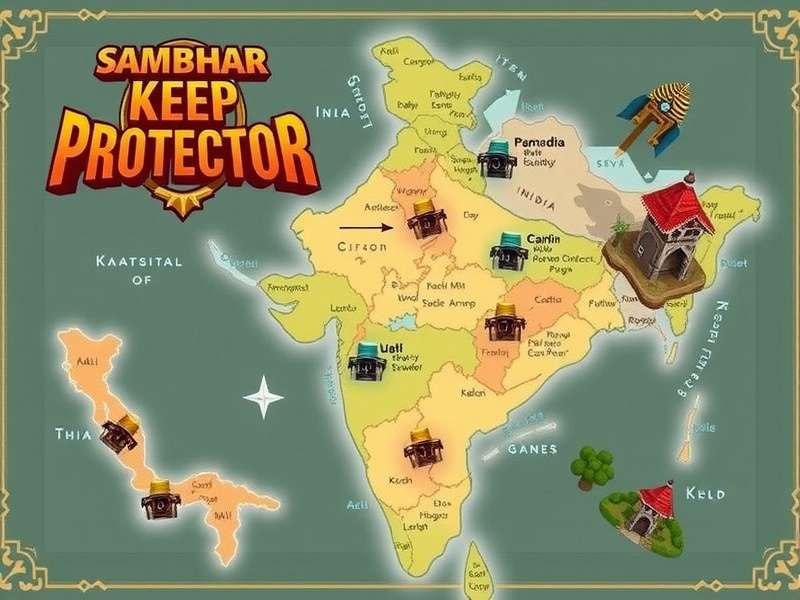
Examples of defensive towers in Sambhar Keep Protector, including the Kadhai Tower, Chili Cannon, and Sambhar Cannon – all inspired by Indian kitchen utensils and cooking tools
Resource Management: Spices & Currency
Resource management is a key part of Sambhar Keep Protector’s gameplay, as players must collect and manage spices and currency to build and upgrade towers, deploy abilities, and progress through the game. There are four main resources in the game:
1. Spice Coins 🪙
Spice Coins are the primary in-game currency, used to build and upgrade towers, purchase basic abilities, and unlock new levels. They are earned by defeating enemies, completing levels, and collecting spice bags scattered across the map.
Spice Coins can also be earned through daily logins, weekly challenges, and events. For example, logging in every day for a week earns players a “Weekly Spice Bonus” of 10,000 Spice Coins, while participating in a Diwali event earns players bonus Spice Coins for defeating festive-themed enemies.
2. Sambhar Shards 💎
Sambhar Shards are a rare currency used to unlock new towers, abilities, and cosmetic items. They are earned by completing boss battles, survival mode levels, and multiplayer co-op missions.
Sambhar Shards can also be purchased with real money (optional), but the game is designed so that players can earn enough Sambhar Shards through gameplay to unlock all core content. This fair approach has earned the game praise from Indian players, who appreciate that they don’t have to spend money to progress.
3. Rare Spices 🌿
Rare Spices are special resources used to craft powerful abilities and upgrade boss towers. There are 15 types of Rare Spices, each associated with a different region of India. For example, “Tamil Nadu Turmeric” is found in the Tamil Nadu Temple Town region, while “Punjab Cumin” is found in the Punjab Farmlands region.
Rare Spices are collected by completing Spice Quest levels, exploring hidden areas in Story Mode, and participating in regional events. Each Rare Spice has a unique effect – for example, Tamil Nadu Turmeric increases tower damage by 20%, while Punjab Cumin increases tower range by 15%.
4. Cooking Ingredients 🧂
Cooking Ingredients are resources used to cook special dishes in the Spice Quest mode, which grant temporary power-ups. There are 30 types of Cooking Ingredients, including rice, lentils, vegetables, and spices.